
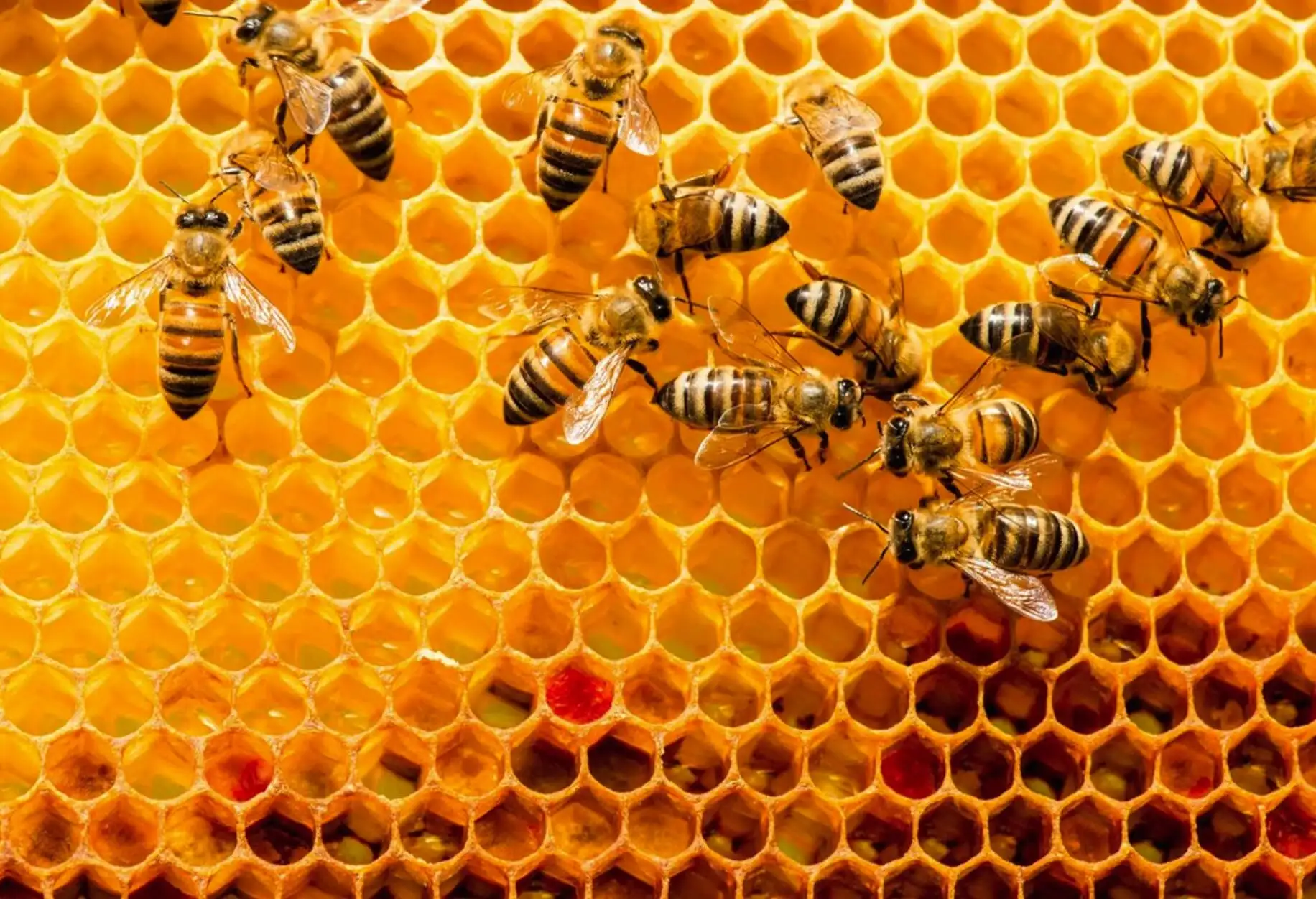
Applications · Insect rearing and entomology
Insect rearing chambers for entomology
Stable temperature, humidity and photoperiod to rear Drosophila, mosquitoes, moths, bees or beetles without stressing the specimens, in chambers built for the round-the-clock use that rearing demands.
What an insect colony needs
An insect’s life cycle depends on temperature, humidity and day length. A shift of a couple of degrees speeds up or slows down development and changes the results of a test.
An entomology chamber holds those conditions day and night and adds what a standard growth chamber lacks: flicker-free light, humidity that neither heats nor disturbs the insects, escape protection and odour control. It is used in genetics, epidemiology, pest control, insect farming for food and feed, and species conservation.
Temperature
Most colonies are kept between 20 and 30 °C. Diapause or cold-tolerance work needs to go below +10 °C.
Humidity
Many species need controlled humidity, often 50 to 80 % RH, without the humidifier adding heat.
Light and photoperiod
Programmable day/night cycles with warm, flicker-free light, so behaviour is not disturbed.
Clean air
Adjustable air speed, protective mesh, HEPA filters and odour extraction for large colonies.
Typical rearing conditions
| Species or test | Temperature | Humidity | Photoperiod |
|---|---|---|---|
| Drosophila melanogaster | 25 °C (18 °C for stock keeping) | 60 % RH | 12 h light / 12 h dark |
| Mosquitoes (Aedes, Anopheles) | 26-28 °C | 70-80 % RH | 12 h / 12 h |
| Greater wax moth (Galleria mellonella) | 28-30 °C | Not critical | Darkness |
| Mealworm (Tenebrio molitor) | 25-28 °C | 60-70 % RH | Darkness |
| Diapause and cold tolerance | Below +10 °C | Depending on the species | Short days |
Indicative values from common protocols. Every species and lab has its own: we help you configure the chamber for your colony.
Recommended chambers

EcoLine
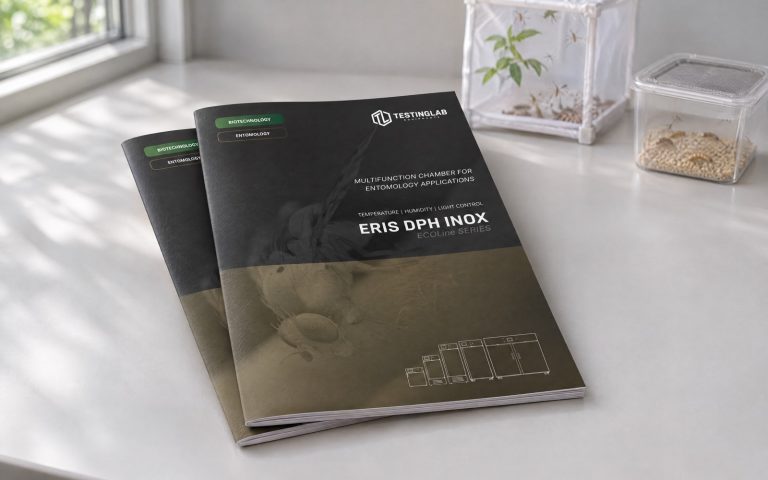
ERIS DPH INOX
- 5 sizes, from 150 to 1,345 L
- +10 to +55 °C; versions down to -20 °C
- Flicker-free 2800 K LED; 3L LED version
- External humidifier, 30 to 80 % RH
Choose it if… you want a dedicated entomology chamber in stainless steel that is easy to clean.
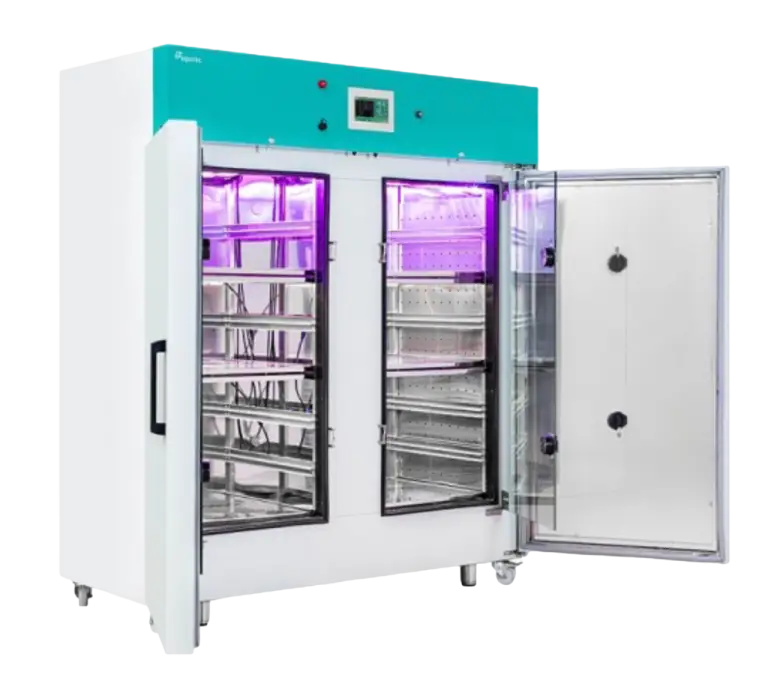
ProLine
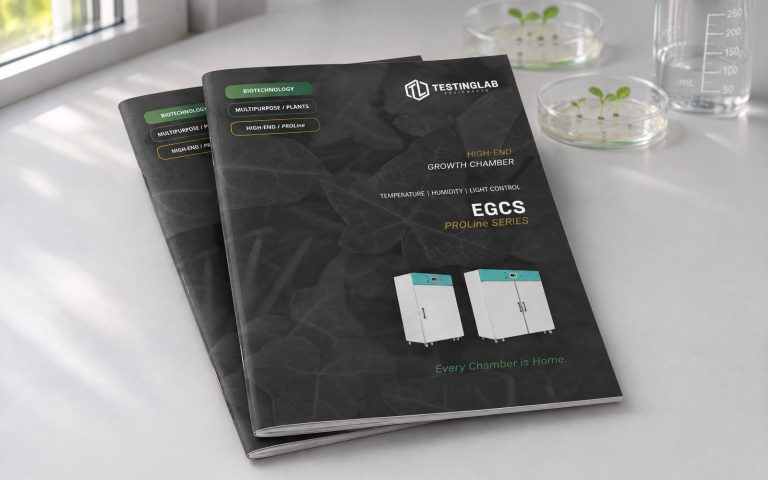
EGCS DPH
- 18 volumes, from 190 to 3,500 L
- +4 to +60 °C; options from -30 to +80 °C
- Humidity 30 to 90 %, extendable
- Entomology pack: warm LED, HEPA, mesh and odour extraction
Choose it if… you need more volume, extreme ranges or two airflow layouts.
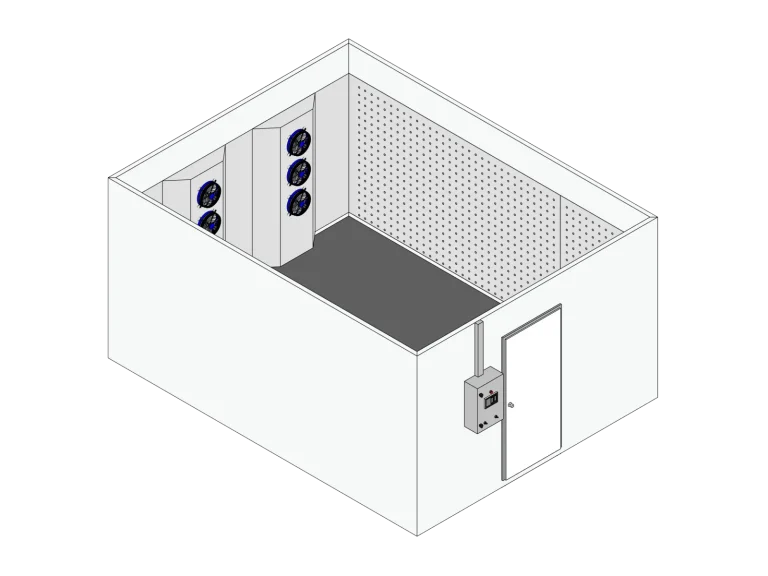
WalkInLine
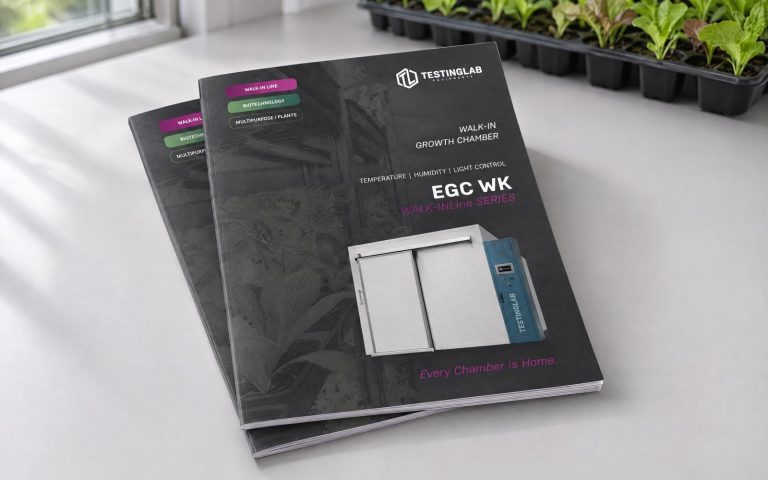
EGC WK walk-in
- 6 to 50 m³, built to measure
- Multi-level racks or trolleys
- Programmable climate and light
- Container version (Deploy)
Choose it if… you rear insects at scale or need to walk in with trolleys and large cages.
Options designed for entomology
External humidification
The ultrasonic humidifier sits outside the chamber: moisture arrives with the air, with no heat or ultrasound near the insects.
Flicker-free 2800 K LED
Warm white boosted in red, with no stroboscopic effect. The 3L LED version has 3 independently controlled levels.
Mesh and HEPA filters
Fine mesh on the motor and air passages, and HEPA filters at the air inlet and in the refrigeration circuit.
Odours and fresh air
Air renewal and odour extraction run from the controller.
PVC mesh cages
Highly air-permeable and reusable, sized to the shelves.
Cold for diapause
Versions down to +4, 0, -10 or -20 °C, with segment programs.
How to choose your entomology chamber
- Colony size. Count cages, vials or boxes per cycle and leave room for air to flow between them.
- Humidity. If the species needs it controlled, choose the external humidifier from the start.
- Temperature. For diapause, cold studies or cold-climate species, ask for the version that goes below +10 °C.
- Scale and biosafety. For large colonies, add HEPA and odour extraction, or move up to a walk-in room.
Frequently asked questions
What conditions does Drosophila rearing need?
The usual set-up is 25 °C, around 60 % RH and 12 hours of light and 12 of darkness. Stocks kept for longer are moved to about 18 °C, which slows the cycle. A chamber with segment programs holds both conditions and switches between them on its own.
Why 2800 K, flicker-free light?
Warm white at 2800 K, boosted in red, suits insect rearing better. The system does not flicker either, which avoids stroboscopic effects that stress specimens and change their behaviour.
Why is the humidifier outside the chamber?
A humidifier inside adds heat and ultrasound close to the insects. Outside, moisture arrives with the air without those side effects, and the chamber works from 30 to 80 % RH.
How are escapes and odours prevented?
With fine mesh on the motor and air passages, HEPA filters at the air inlet, odour extraction and air renewal from the controller, and reusable PVC mesh cages.
What is the difference between ERIS DPH INOX and EGCS DPH?
ERIS DPH INOX is the dedicated entomology chamber, in 5 sizes from 150 to 1,345 L and +10 to +55 °C as standard. EGCS DPH is the high-end range: 18 volumes up to 3,500 L, ranges from -30 to +80 °C, extendable humidity and two airflow layouts.
Technical advice
Let’s talk about your colony
Tell us which species you rear, in which containers and under which conditions. We will recommend the right configuration and send you the catalogue and a quote.
- Model and option recommendation
- Full series catalogue
- Quote tailored to your colony