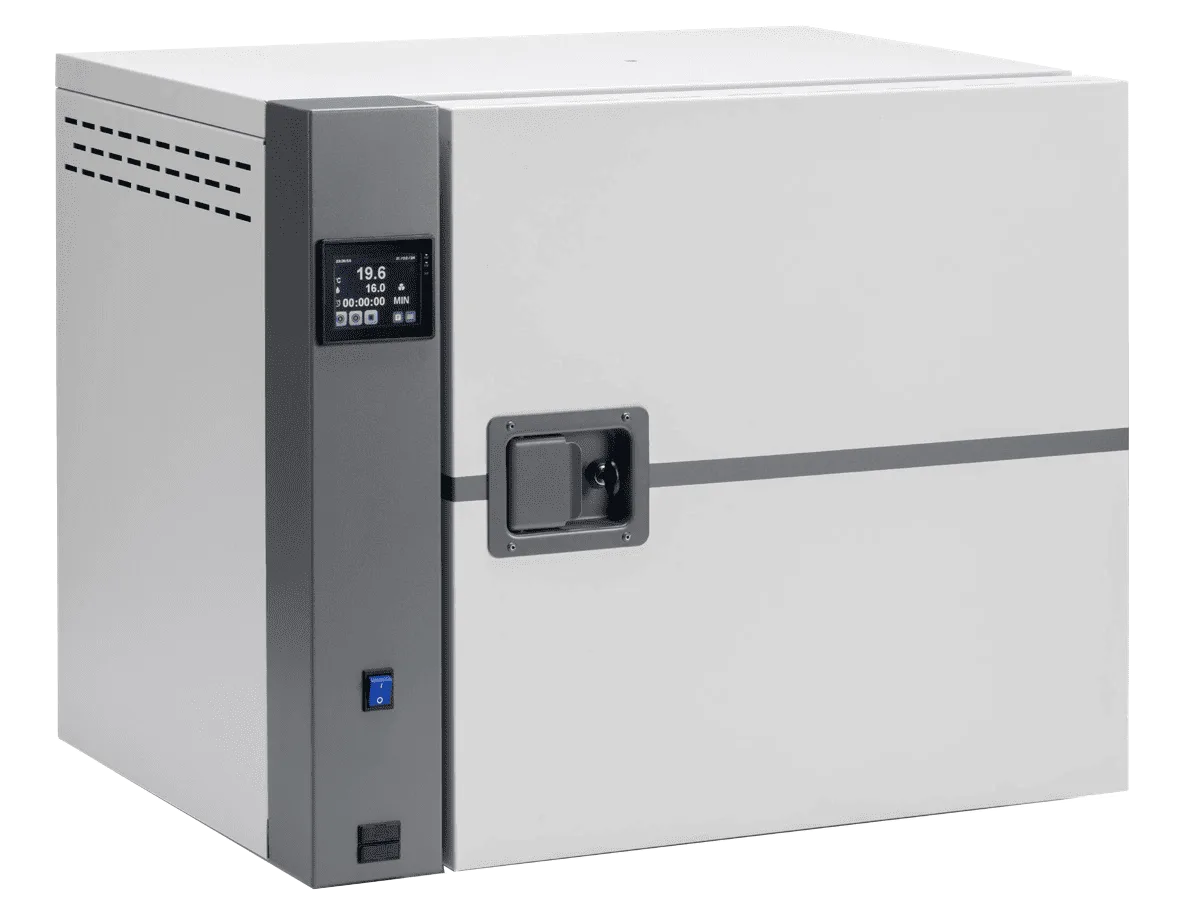
Drying ovens up to 300 °C. PID control, 3.1 safety and programmable versions. Volumes from 52 to 1000 L, large capacity and accessories.

FOR DRYING AND INCUBATION
Laboratory ovens for drying and incubation. Precise temperature control, safety class 3.1, natural convection or forced ventilation. Various sizes and accessories. Request a quote.
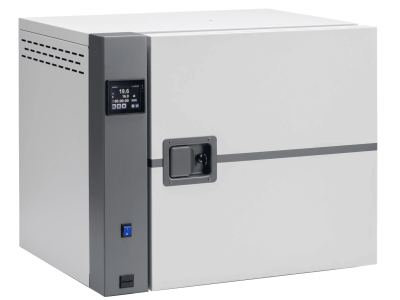
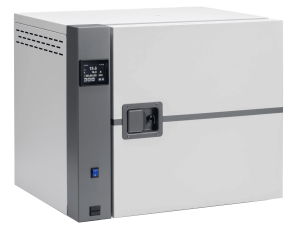
Versatile ovens for reliable, uniform and repeatable thermal processes. Options with natural convection or forced ventilation, PID control and safety 3.1. Designed for intensive laboratory use, with stainless steel interiors and digital control.
Testing Lab’s LABORATORY OVENs are ideal for thermostatic applications requiring high precision, such as material testing. They are also suitable for less demanding processes such as drying and sterilising glassware, as well as other routine applications in laboratories and industry. Equipped with forced ventilation or natural air convection, depending on the application. Unlike incubators, ovens operate in a higher temperature range, from 5°C above ambient temperature to 300°C.
Testing Lab’s PELTIER-COOLED INCUBATORS or FROM AMBIENT TEMPERATURE are designed primarily for microbiological applications where it is essential to maintain a stable temperature of 37°C in the samples. They use a natural or forced air convection system to avoid damaging the sample, with a temperature range that generally does not exceed 80°C. These laboratory incubators create the optimal microclimate for the cultivation of microorganisms, preserving the necessary conditions without altering the environment.
Precise and repeatable control
PID regulation with PT100 probe, resolution of 0.1 °C and timer hh:mm:ss or infinite. In programmable versions, cycles by time and temperature for ramps and maintenance.
Faster or optimal process depending on the load
Two air dynamics: natural convection (flow-sensitive samples) or forced ventilation; in programmable forced mode, fan speed can be adjusted to set homogeneity and cycle times.
Integrated safety for continuous operation
Class 3.1 safety thermostat and key lock on the door; designed for safe shift-to-shift operation.
Robust construction and easy to maintain
Epoxy-coated steel exterior and 18/8 stainless steel chamber; Ø10 mm wall bushings for probes and Ø40 mm rear chimney (optional) with panel control.
Modern interface and traceability
LCD touch screen (4 languages), delayed start and energy-saving function. On models with ramps: calibration report and remote monitoring option via WiFi module.
Capacities for growth
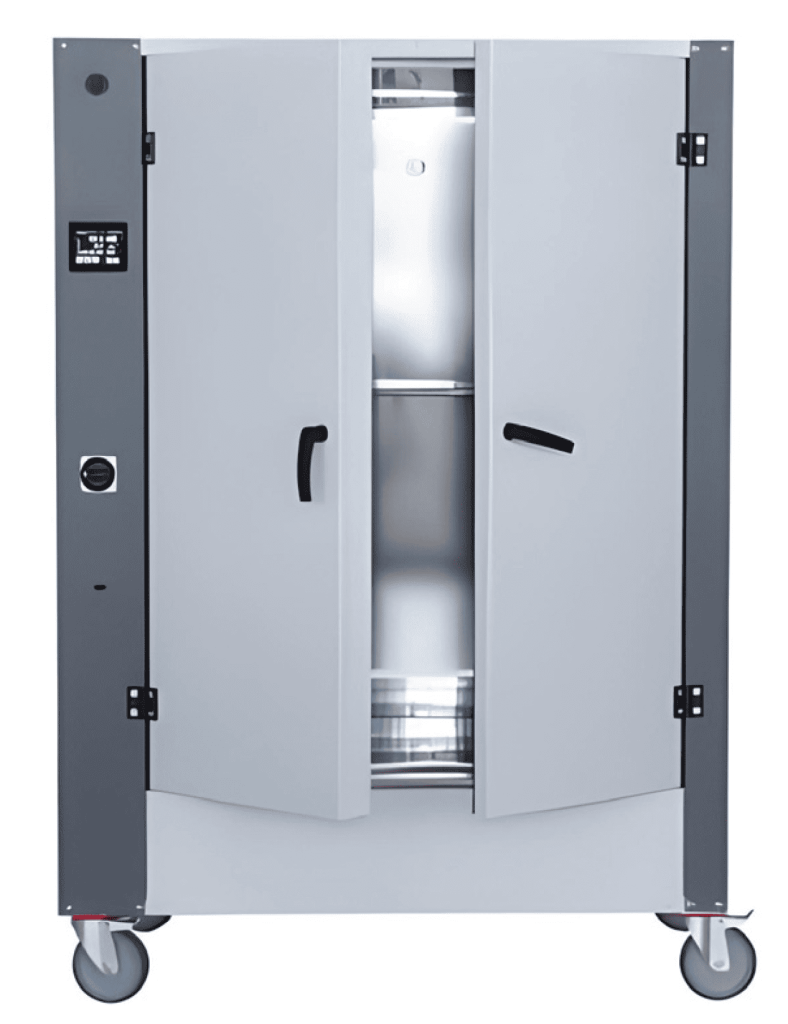
Ranges from 52 to 1000 litres; up to 21 shelves maximum in large capacity, maintaining typical accuracy of ±1% in the 720 and 1000 L versions.
Ranges adapted to each use
Drying up to 300 °C (depending on model) and large capacity versions up to 220 °C with 330 °C option; positive temperature incubation up to 80 °C.
Accessory ecosystem
Additional shelves, supports/tables, cable glands and chimneys with or without regulation to adapt the chamber to the working method.
Drying. Up to 300 °C, natural convection or forced ventilation; programmable versions and large capacity.
Incubation. Positive temperature incubation ovens (up to 80 °C); programmable options. For working below ambient temperature, see also Peltier-cooled incubators.
Drying ovens up to 300 °C. PID control, 3.1 safety and programmable versions. Volumes from 52 to 1000 L, large capacity and accessories.
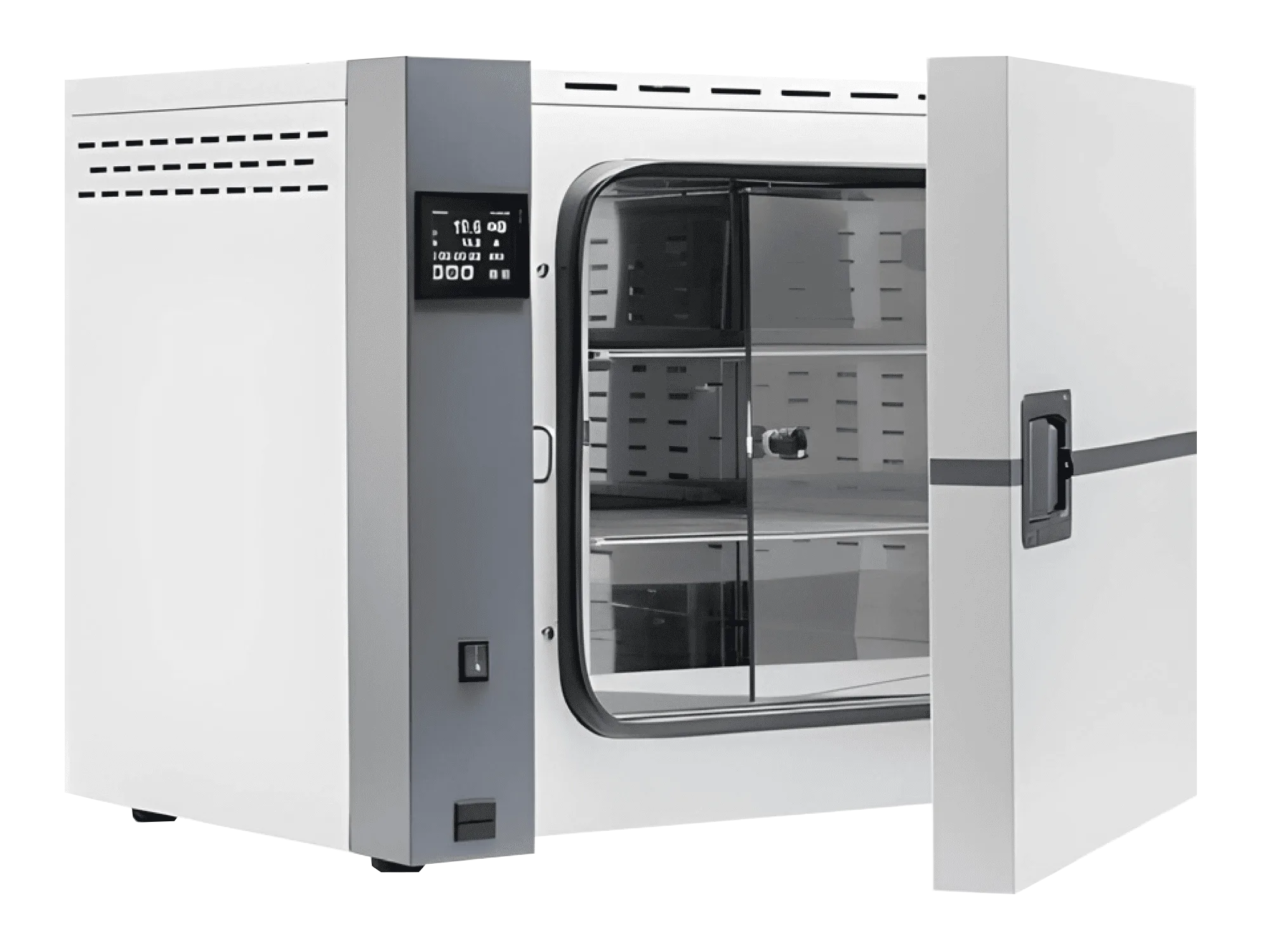
Incubation ovens for positive temperature processes (up to +80 °C). PID control, safety 3.1 and programmable versions.
Drying
Incubation (positive temperature)
Sectors and typical applications
Selection note
Do you need a fully customisable laboratory oven designed specifically for your projects? At TestingLab, we offer tailored solutions that guarantee optimal results. Contact us today and request a no-obligation quote. Our team of experts will advise you on the oven that best suits your needs. If we don’t have it, we’ll create it together.
Request for information
About:
Here are some of the questions we are asked most frequently. We are sure that some of them will answer your questions. If not, please fill in the form above.
1) What is the difference between drying and incubation ovens?
Drying ovens operate at higher temperatures (from ambient +5 °C to 300 °C) for drying, curing and thermal ageing. Incubation ovens focus on stable positive temperatures up to 80 °C (e.g. 37 °C) for applications that do not require cold or humidity control.
2) Natural convection or forced ventilation?
Natural convection is suitable for flow-sensitive samples. Forced ventilation accelerates homogeneity and cycle times; in programmable versions, the fan speed can be regulated.
3) What temperature ranges do they cover?
For drying: up to +300 °C in 52–400 L; in large capacities, +220 °C with the option of +330 °C. For incubation: +80 °C max. (positive).
4) What accuracy and resolution do they offer?
Typical resolution 0.1 °C. Example in 52–400 L ovens with forced ventilation: ±1.0 °C at 70 °C and ±2.0/±3.0 °C at 300 °C (depending on volume). In incubation, typical accuracy at 37 °C of ±0.4…±0.8 °C (depending on capacity).
5) Can ramps and maintenance be programmed?
Yes. The programmable series allow cycles by time and temperature (ramps/maintenance). Available in ovens (ESTFNRD/ESTFFRD) and programmable incubation (EICTP).
6) Can I record data or monitor remotely?
On models with ramps, a WiFi remote monitoring module is available as an accessory. References for ovens and incubators with ramps.
7) What chamber capacities are available?
From 52, 120, 240, 400 L to 720 and 1000 L in large capacity, for both drying and incubation. In 720/1000 L, up to 21 shelves max.
8) How do I insert cables or probes into the chamber?
All ranges include Ø10 mm wall bushings for probes/thermometers.
9) Is the smoke extraction or air exchange adjustable?
There is a 40 mm rear chimney; it can be ordered with opening/closing control from the panel as an accessory.
10) What safety features are included?
Class 3.1 safety thermostat in most ranges. The Basic Series is supplied in class 0 and can be equipped with a 3.1 thermostat as an option.
11) What power supply do they require?
Standard models at 220/240 V–50/60 Hz. In large capacities, the installed power can reach 5200–6200 W (depending on 720/1000 L). Check the model data sheet to confirm.
12) Can I observe the samples without losing temperature?
Incubators are equipped with an internal glass door for inspection without compromising thermal uniformity.
13) What maintenance do they require?
Periodic cleaning of the 18/8 stainless steel interior, functional check of the safety thermostat and inspection of seals/shelves. The construction facilitates cleaning and maintenance.
14) When should I switch to a Peltier-cooled incubator?
When you need to work below room temperature or require fine control around 37 °C with enhanced stability. Peltier incubators allow operation >10 °C below ambient (depending on model).
15) What accessories are available?
Perforated/mesh shelves, tables/supports, table trolley, Ø40 chimney (standard or adjustable) and WiFi module on equipment with ramps.